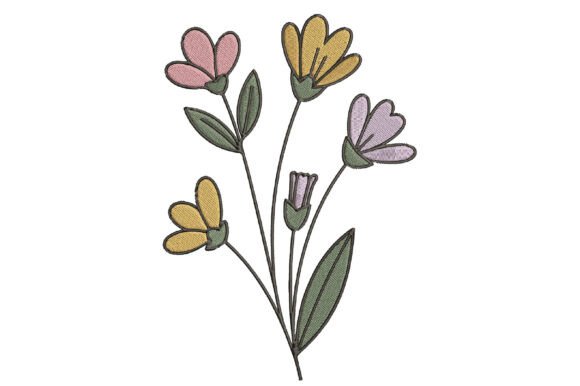
Minimalist Wildflower Embroidery Design Review
As a designer who relies on embroidery files for both personal projects and client work, I approach new designs with a practical eye. When I saw the Minimalist Wildflower Embroidery Design listed among the Freebies on Creative Fabrica, my interest was piqued. Free designs can be hit or miss, but the promise of “soft botanical beauty and modern simplicity” felt aligned with current market trends. I downloaded it with the intent of evaluating its real-world application for a potential customer order: a set of custom kitchen towels for a boutique.
First Impression: Subtle Decoration with Modern Appeal
The initial visual mood is exactly as described. It’s a delicate, airy arrangement of flowers and slender stems. The level of detail is purposefully restrained, leaning into clean outlines and elegant leaves rather than dense, textured fills. This gives the design a distinct stitching personality—it feels less like a traditional, bold floral and more like a subtle, sketched accent. This decorative appeal is its strongest asset for projects where understated elegance is key. It naturally fits items meant for gentle decoration, like nursery decor, linen napkins, or minimalist apparel.
Project Fit: Where This Wildflower Design Excels
Thinking through my inventory of common projects, this machine embroidery design immediately suggested several applications. For custom apparel like lightweight blouses or delicate sweatshirts, the design offers a soft branding touch without overwhelming the garment. Its scale and style seem perfect for baby items—a baby blanket or swaddle with this embroidered corner would be a beautiful, safe handmade gift. For tote bags and pillow covers, it provides a modern, botanical element that elevates the handmade presentation without looking rustic.
As an Etsy seller and someone who produces for craft fairs, I considered its utility for quick-turn, high-value items. This embroidery file could easily be adapted for a series of products: a coordinated line of kitchen towels, aprons, and linen pouches creates strong brand consistency. The design also lends itself well to embroidered patches, which could be applied to caps or used as standalone decorative pins. For product photography, its clean lines and pastel aesthetic would photograph beautifully, aiding customer engagement and perceived value.
Practical Performance on Fabric and Hoop
The real test of any design is how it performs in the hoop. The minimalist nature of this Creative Fabrica embroidery design suggests it will handle smaller hoop sizes well, making it efficient for smaller items like the corners of towels or baby bibs. Areas with potential challenge, like very slender stems, will require attention to stitch density and stabilizer choice. On textured or stretchy fabric, such as a sweatshirt, a solid stabilizer will be crucial to prevent puckering. On dark fabric, the suggested pastel thread colors might need adjustment for contrast—a test on scrap fabric is essential.
For curved surfaces like caps, the design’s open, non-dense layout should help it conform without distortion. A significant consideration for commercial embroidery or products needing frequent washing, like kitchen towels, is the durability of small details. After stitching, inspecting those fine lines for integrity is a must. This isn’t a design I’d use for a heavily abrasive item, but for decorative home goods and lightweight apparel, it should hold up beautifully.
Affecting Product Value and Customer Trust
Using a well-executed design like this directly impacts the finished product’s value. For a boutique customer or an online shopper, an embroidered item with clean, modern aesthetics feels professionally made. It builds buyer trust. The giftability of an item adorned with this wildflower design is high—it’s universally pleasing without being overly thematic. For digital product sellers creating printable mockups, this design acts as a versatile design asset to showcase potential applications, from tote bag designs to sweatshirt embroidery.
Essential Steps Before Stitching for Sale
Before running this for any client order or listing it on my handmade shop, I follow a strict protocol. First, I always check the official product page on Creative Fabrica for file details and licensing, especially for a Freebies item. I confirm the included formats, hoop size recommendations, and any specific license terms for commercial use. I then stitch a test on both light and dark scrap fabric of the material I intend to use, reviewing thread color contrast and the behavior of all small details. This reveals if any satin stitch or fill stitch areas need adjustment for my specific machine or fabric.
This practical step is non-negotiable. It saves time, material, and ensures the final handmade product meets my quality standards. Only after this test and confirmation of the commercial license would I proceed to produce items like pillow covers or patches for my Etsy listings.
Final Evaluation for Creative Entrepreneurs
The Minimalist Wildflower Embroidery Design is a thoughtfully crafted free resource. Its value lies in its modern, adaptable aesthetic. It’s not a dense, statement piece but a refined accent. For embroidery designers, Etsy sellers, and apparel decorators looking for a design that adds soft botanical charm without complication, this is certainly worth downloading. Its suitability for a range of products—from personalized gifts to boutique merchandise—makes it a versatile addition to a digital library.
My advice is to approach it with a clear project in mind. Download it, inspect the files, and stitch that test sample. See how it behaves on your chosen fabric. For the right project—a set of elegant kitchen towels, a delicate baby blanket, or a minimalist tote bag—it can elevate your finished product significantly. It embodies that balance of beauty and simplicity that so many customers seek today.