Little Miracle Embroidery Design: A Real-World Review
As an embroidery designer who creates products for real customers, I’m always looking for files that translate well from screen to stitch. When considering the Little Miracle design for a project, my first question is always: will this hold up in a real, often commercial, application? This review is based on that practical perspective.
First Impressions: Mood and Potential
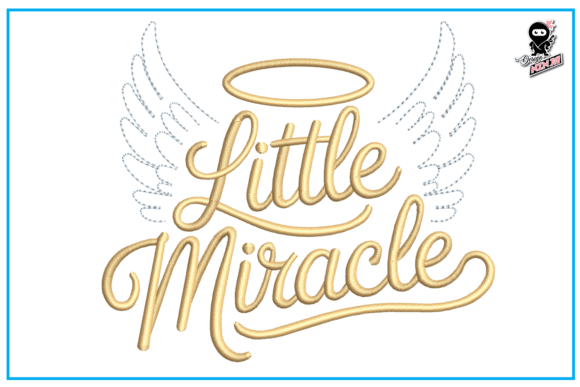
Right away, Little Miracle evokes a gentle, hopeful sentiment. It fits squarely within the Babies & Kids Quotes category, but its appeal isn’t limited to infant items. The visual mood is sweet and decorative, carrying a personality that could elevate a simple gift into something meaningful. For an embroidery designer, this means it has strong giftability—a key factor for Etsy sellers and craft fair vendors. The design feels like it would naturally belong on a baby blanket, a nursery pillow cover, or even a commemorative cap. Its decorative appeal is clear, but the real test is in the stitching.
Performance in Real Embroidery Projects
Thinking about specific applications, Little Miracle likely has a range of uses. For custom apparel like sweatshirts or aprons, it could serve as a focal point. On tote bags and pillow covers, it would act as a charming accent. For commercial embroidery products or boutique merchandise, such a design can enhance perceived value and handmade presentation. However, its successful application depends entirely on its technical execution.
A crucial consideration is the hoop size. Many designs in this category are intended for smaller hoops. If Little Miracle contains very tiny lettering or densely packed stitch areas, it might require careful handling on textured or stretchy fabrics like caps. For dark fabric applications, the thread color contrast becomes paramount—a design with light, delicate stitches might need a different approach or stabilizer to remain crisp. I always imagine stitching it on a curved cap surface or a kitchen towel that will undergo frequent washing; the design’s stitch density and detail integrity must withstand that use.
Practical Embroidery Notes for Success
Before committing any Little Miracle embroidery file to a customer’s item, a series of checks is non-negotiable. First, always test on scrap fabric identical to your final product. This reveals how the design behaves with your chosen stabilizer and thread. Second, review the stitch density visually; very dense areas can be challenging on lightweight fabrics. Third, confirm the actual hoop size requirement—this is critical for planning your project layout. Comparing light and dark fabric mockups digitally can help plan thread choices.
After stitching a test, inspect the small details closely. Are the finest elements clean? Does the overall look have the visual appeal you want for product photography? For handmade shop owners, the finished stitch quality directly impacts buyer trust and brand consistency. A poorly executed file can undermine a beautiful product, while a clean, precise embroidery can significantly boost customer engagement and perceived value.
Key Steps Before Selling Finished Items
- Test the machine embroidery design on a fabric scrap that matches your project.
- Check thread color contrast for both light and dark background fabrics.
- Review the stitch density and potential for puckering, especially on stretchy fabric.
- Confirm the necessary hoop size and your machine’s compatibility.
- Use the proper stabilizer for your specific fabric type (e.g., tear-away for stable fabrics, cut-away for knits).
- Inspect all small details after the first stitch-out.
- Always confirm file details and licensing on the Creative Fabrica product page before selling finished items. This includes understanding the terms for commercial use if you are an apparel decorator or digital product seller.
Affecting Product Value and Presentation
When a design like Little Miracle stitches out well, it becomes a powerful design asset. For an Etsy listing, it allows for beautiful, detailed product photography. It can turn a basic tote bag into a personalized gift, or a simple sweatshirt into a cherished keepsake. In a craft fair setting, items featuring such embroidery often attract more attention due to their handmade presentation and visual appeal. For small business owners, using consistent, high-quality embroidery files helps build a cohesive product line.
However, the inverse is also true. If the file has technical issues—like impractical small lettering for the chosen hoop or unstable dense fills—it can compromise the final product. This is why the initial evaluation and test stitch are so vital. They determine whether this Creative Fabrica embroidery design is merely a digital file or a reliable tool for your creative business.
Final Thoughts on Real-Project Use
Little Miracle presents itself as a design full of potential. Its sentimental nature fits a wide range of projects, from baby blankets to decorative patches. Whether it’s worth downloading and using comes down to its practical performance. Without knowing specific details like stitch count or exact file formats from the product description, the responsibility falls on the designer to do their due diligence.
My advice is to approach it as you would any new digital embroidery file: with a plan for testing. Consider your target applications—are they aprons, kitchen towels, or embroidered patches? Each demands different considerations. Visit the Creative Fabrica product page to gather all available technical information. Then, make your test stitch the final judge. A design that stitches cleanly, holds up on the intended fabric, and aligns with your commercial licensing needs is a true asset. For embroidery designers building real products, that’s the only review that matters.